How to Choose Dental Schools to Apply To (Complete Guide for Pre-Dental Students)
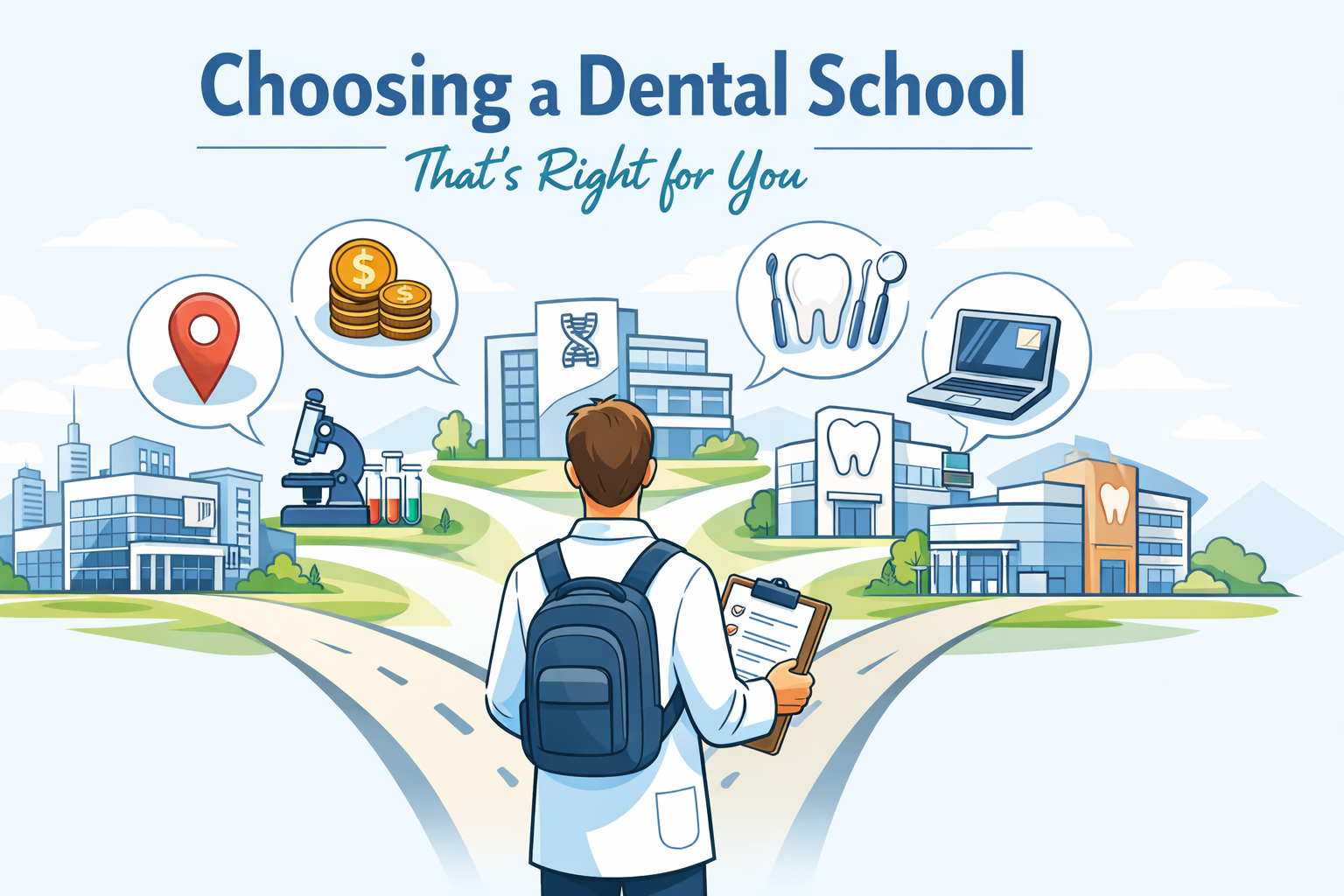
Choosing a dental school is one of the most important decisions you’ll make as a pre-dental student. With dozens of accredited programs across the United States, narrowing down where to apply—or ultimately enroll—can feel overwhelming. Rankings and reputation often get the most attention, but the best dental school for you is the one that aligns with your goals, learning style, finances, and lifestyle.
Understanding the key factors that shape your dental school experience will help you make a confident and informed decision.
Location Matters More Than You Think
Where you attend dental school will shape your daily life for four demanding years. Location affects your cost of living, patient population, networking opportunities, and overall quality of life.
Some students prefer staying close to family and familiar support systems, while others want the experience of living somewhere new. Urban programs often provide exposure to larger and more diverse patient populations. For example, studying in a major metropolitan area like New York City may offer a wide range of clinical cases and networking opportunities. However, the cost of living is significantly higher compared with smaller cities like Omaha.
You should also think about where you may want to practice after graduation. Many dental schools have strong regional networks that can help with licensure, job placement, and professional connections within the surrounding state.
The Financial Investment Is Significant
Dental school is a major financial commitment, and the cost can vary widely between programs. Tuition at public schools is often lower for in-state residents, while private institutions typically charge the same tuition regardless of residency.
For instance, public institutions like University of California, Los Angeles School of Dentistry may offer reduced tuition for California residents. Meanwhile, private schools such as New York University College of Dentistry generally have a single tuition rate for all students.
When comparing schools, look beyond tuition alone. Consider the full financial picture, including living expenses, equipment costs, and available scholarships. A school with slightly higher tuition may still be more affordable if it’s located in an area with a lower cost of living.
Estimating your projected student debt and repayment timeline can help you understand the long-term financial impact of your decision.
Curriculum Structure and Teaching Style
Dental schools teach the same core competencies required for licensure, but the way they structure their curriculum can vary considerably.
Some schools rely heavily on traditional lecture-based instruction, while others incorporate problem-based learning or case-based education. In certain programs, students begin clinical exposure early in their training, while others focus on foundational sciences during the first years before transitioning into patient care.
Grading systems are also different across schools. Some programs use pass/fail grading, which can reduce stress and competition among students. Others use traditional grades or ranking systems, which may be helpful if you plan to apply for competitive specialty residencies.
Understanding how a program teaches—and how students are evaluated—can help you determine whether that learning environment fits your academic style.
Class Size and School Culture
The size and culture of a dental school can significantly shape your experience.
Smaller programs often provide more individualized faculty attention and tighter-knit student communities. Larger programs may offer broader alumni networks and a greater diversity of perspectives.
During interviews or campus visits, pay close attention to how students interact with each other and with faculty. Are students collaborative and supportive? Do they seem stressed or competitive? These cultural factors can have a major impact on your well-being and success during dental school.
Clinical Experience Is Critical
Clinical training is one of the most important aspects of dental education. The amount and variety of patient care you receive will influence how confident you feel when entering practice.
When researching schools, ask questions about when students begin treating patients and what clinical requirements must be completed before graduation. Schools with large patient pools often provide more opportunities to perform a variety of procedures.
Institutions affiliated with large academic medical centers—such as Harvard School of Dental Medicine—may also provide interdisciplinary exposure, allowing dental students to work alongside medical professionals and specialists.
The goal is to graduate feeling prepared and competent in real-world clinical settings.
Research and Specialization Opportunities
If you are considering a dental specialty such as orthodontics or oral surgery, research opportunities and mentorship can play an important role in your preparation.
Schools with strong research programs—like University of Michigan School of Dentistry—often provide opportunities to participate in academic research, present at conferences, and build relationships with faculty mentors.
Even if you plan to pursue general dentistry, research experience can strengthen your critical thinking skills and deepen your understanding of evidence-based practice.
Facilities and Technology
Modern dentistry is rapidly evolving with digital technology. Schools that incorporate advanced technology into their training can help you stay ahead of industry trends.
When exploring programs, look for exposure to digital scanners, CAD/CAM systems, simulation labs, and other modern tools used in contemporary dental practice.
Touring facilities—either in person or virtually—can give you valuable insight into how well-equipped a school is for modern dental education.
Support Systems and Student Well-Being
Dental school can be academically intense and emotionally demanding. Programs that prioritize student support can make a meaningful difference in your overall experience.
Look for schools that offer academic tutoring, mentorship programs, mental health resources, and career counseling. These services can help students manage stress, maintain balance, and stay on track throughout the program.
A supportive environment often contributes significantly to both academic success and personal well-being.
Choosing Fit Over Prestige
While rankings and reputation can be helpful reference points, they should not be the sole factor guiding your decision. The best dental school for you will balance strong clinical training, manageable financial costs, supportive culture, and alignment with your personal goals.
Talk with current students, review financial aid packages carefully, and reflect on where you felt most comfortable during interviews. Ultimately, your success in dentistry will depend less on the name of the school and more on the education, experiences, and relationships you build during those four years.
Choosing a dental school is about finding the environment where you can grow, learn, and thrive as a future dentist.
Final Thoughts
Choosing the right dental school is about more than rankings or reputation. The best program for you is the one that aligns with your goals, learning style, financial situation, and long-term career plans.
Taking the time to evaluate these factors carefully can help you build a smarter school list and ultimately increase your chances of acceptance.
At Dental School Guide, we help pre-dental students:
• Identify the schools where they are most competitive
• Build a strategic school list based on real admissions data
• Tailor their application to each school's admissions priorities and scoring rubrics
If you’d like personalized guidance on where you should apply, schedule a FREE Dental School Strategy Session with a Dental School Guide admissions expert.
In this session, we’ll review your application, identify opportunities to strengthen it, and help you create a smarter path to dental school.
👉 Click here to meet with an admissions expert for a FREE Strategy Session.